
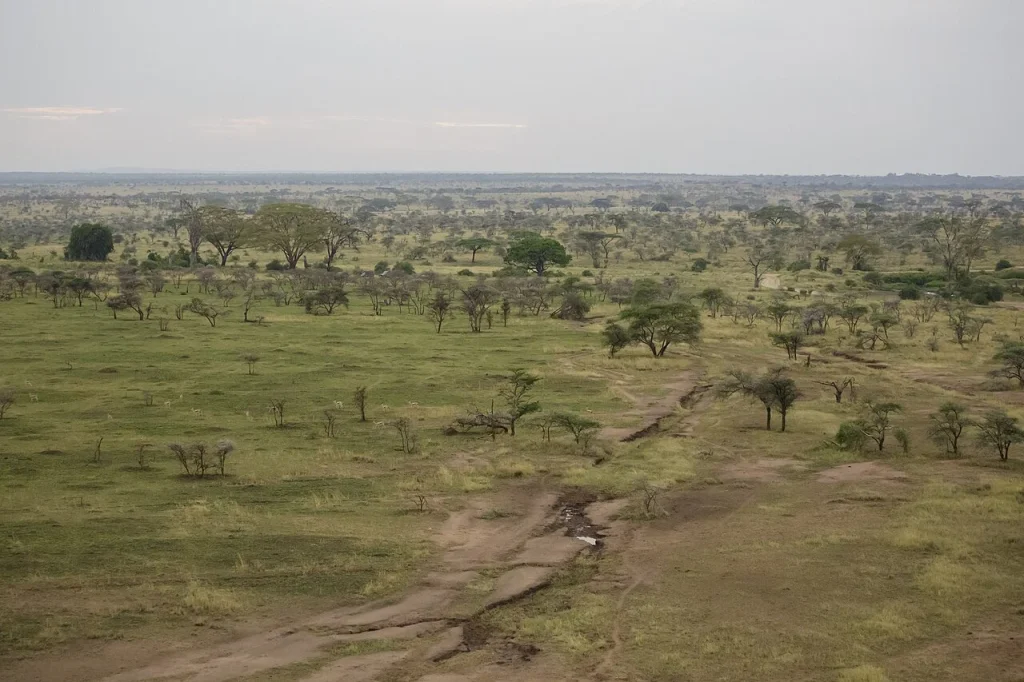

A broad view across the Serengeti can make the landscape seem simple at first: grass, scattered trees and distance. A second look begins to separate the parts. Tracks curve, vegetation gathers differently, and small changes in level alter what can be seen. Choose one of those relationships and give it time.
The opening photograph was made from above in September 2015. An elevated view reveals patterns that may be difficult to see from a vehicle. It does not describe a current road condition or offer access to every visible part of the frame.

Balloon Safari & Bush Breakfast in Tarangire - Miracle Experience
Miracle Experience is a premier eco-luxury Hot Air Balloon Safari company based in Tanzania. Our incredible safaris over the Serengeti and Tarangire N...

Balloon Safari & Bush Breakfast in Serengeti - Miracle Experience
Miracle Experience is a premier eco-luxury Hot Air Balloon Safari company based in Tanzania. Our incredible safaris...

Serengeti Balloon Safari and authentic bush breakfast
Some things are worth getting up early for and this is certainly one of them. The wonderful experience of a hot-air...

Materuni Waterfalls, coffee tour & Kikuletwa Hot Springs
A comprehensive trip, combining hiking, coffee learn, local brewers & a refreshing dip at the hot springs Great cha...
Keep several settings in mind
UNESCO’s description includes open grassland, rocky outcrops known as kopjes, rivers and woodland within the Serengeti setting. The contrast is useful for planning an observational emphasis. It is not a reason to assume that one route or one short visit will contain every kind of landscape.
Ask which areas are actually named in a proposed itinerary and how much time is devoted to each. A provider may use photographs from a broader region than the written programme covers. The list of stops and the arrangements for reaching them deserve the same attention as the imagery.
Look closely at a kopje
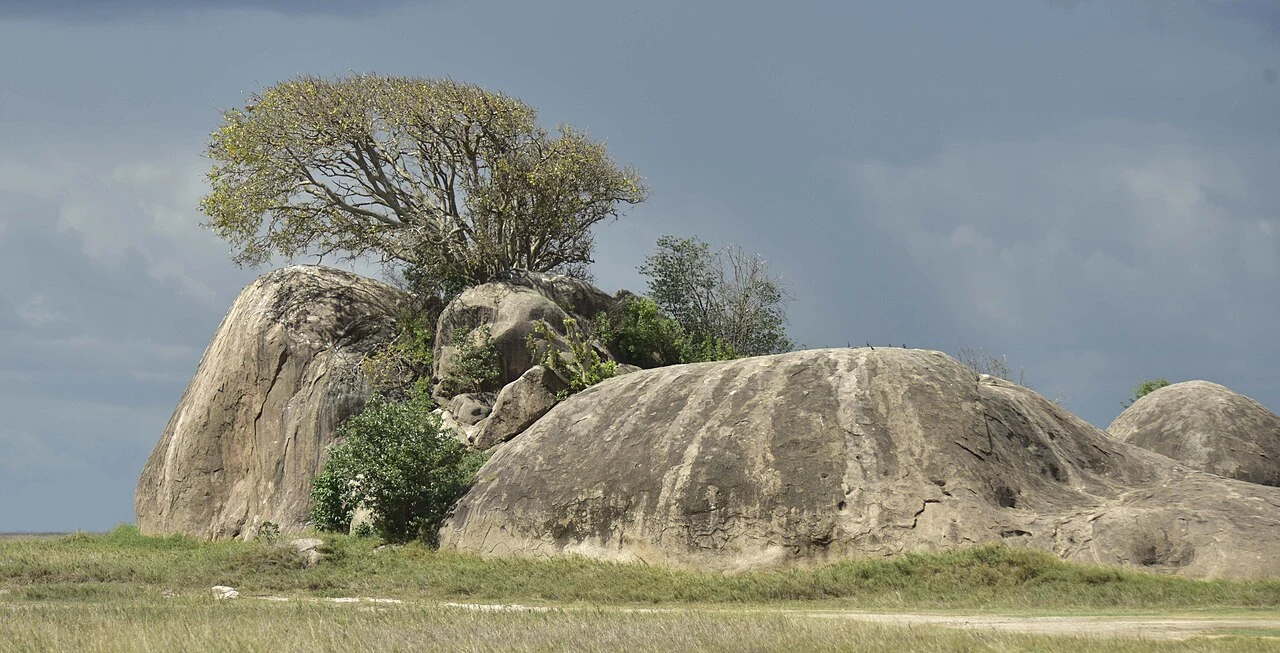

The granite study changes the scale from a wide landscape to one outcrop and its vegetation. Notice the visible shape of the rock, where a tree emerges and the relation between the outcrop and the surrounding grass. Those observations are available from the photograph; a detailed geological explanation requires an identified source or knowledgeable guide.
Our caption gives the Serengeti and the source date, rather than inventing a more specific kopje name. If you do not know which feature an image records, keep that uncertainty visible. A plausible landmark label can be misleading even when the general landscape is correct.
Let water introduce another pattern
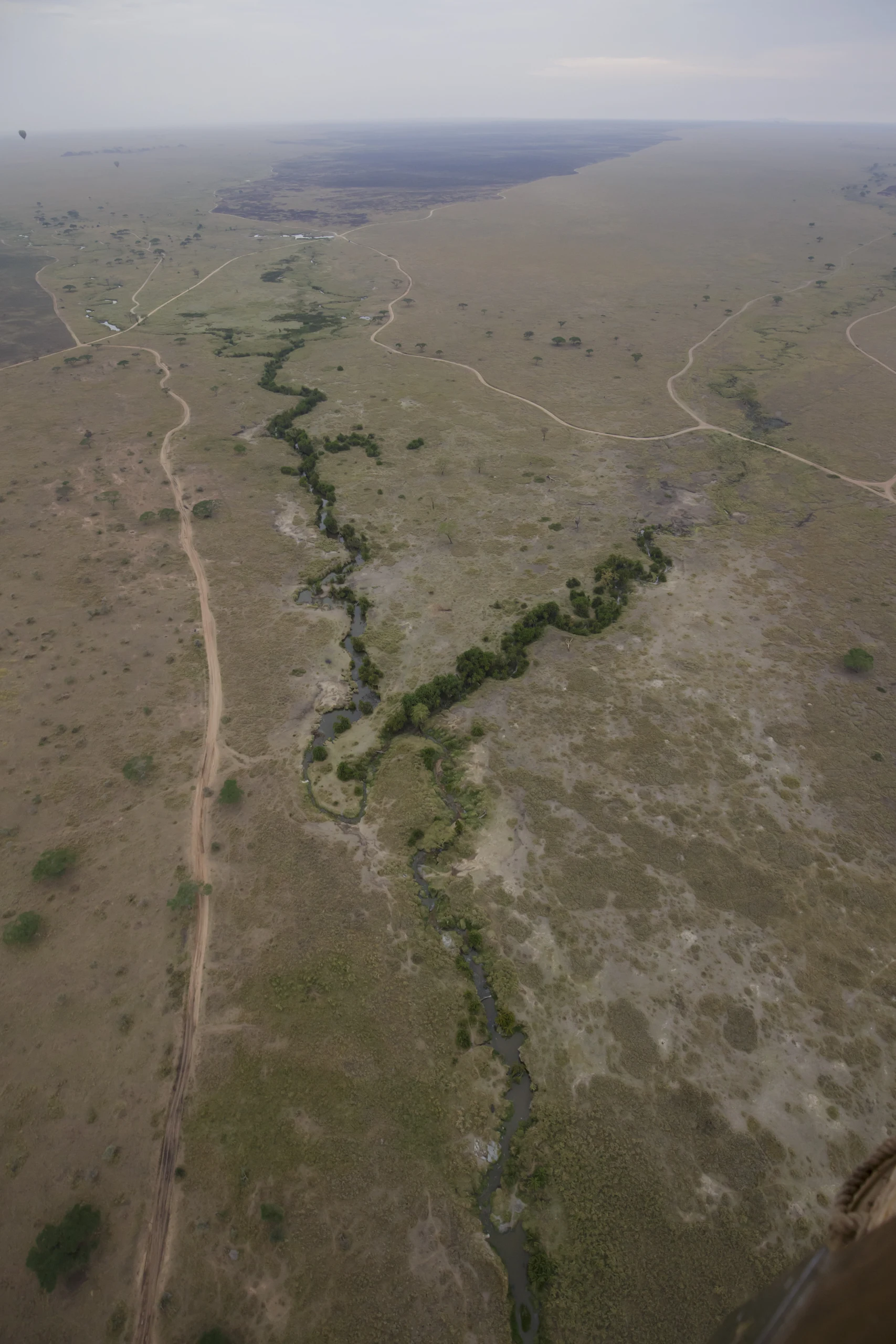

The aerial river-corridor image shows a different arrangement of lines and vegetation. The source identifies the Serengeti, but we do not assign an individual river name that its record does not establish. It is a landscape study rather than a route diagram.
Compare the forms in the photographs without treating them as a continuous journey. A private safari can place more emphasis on landscape observation, but the actual route remains a practical agreement with the provider and the conditions of the visit.
Talk about light without promising it
Photographers often arrive with a preferred image in mind. Explain what interests you: the shape of a tree, the relationship between rock and grass, or the gradual loss of detail in the distance. That is more useful than insisting on a particular sky or an exact scene from another person’s photograph.
Weather, haze and light belong to the actual day. A dated image can inspire a question without becoming a forecast. Keep some room in the plan for observation when the conditions are quieter or less dramatic than expected.
Keep the itinerary readable

3 Days Serengeti & Ngorongoro Group Camping Safari
On this 3-day camping safari, you will be well looked after and see some of the best that Tanzania has to offer. You will experience breathtaking wild...

4h Quad Adventures in Zanzibar: Nungwi / Kendwa Transfer inclus
The price for this activity applies to a maximum of 2 people per Quad. Whether you book for one or two people, the p...

Stone Town Private Walking Tour
It's fascinating to explore historic Stone Town - a UNESCO World Heritage Site - but it's easy to lose your way in t...

Affordable and Reliable Taxi Services in Zanzibar Island
Our services are reliable and affordable, our drivers are very friendly and they are willing to provide extra help t...
Use a short list of named places, arrangements and priorities when discussing an offer. Then distinguish what has been agreed from what remains a possibility. Our guide and vehicle questions can help turn a visual interest into a clearer conversation about the visit.