
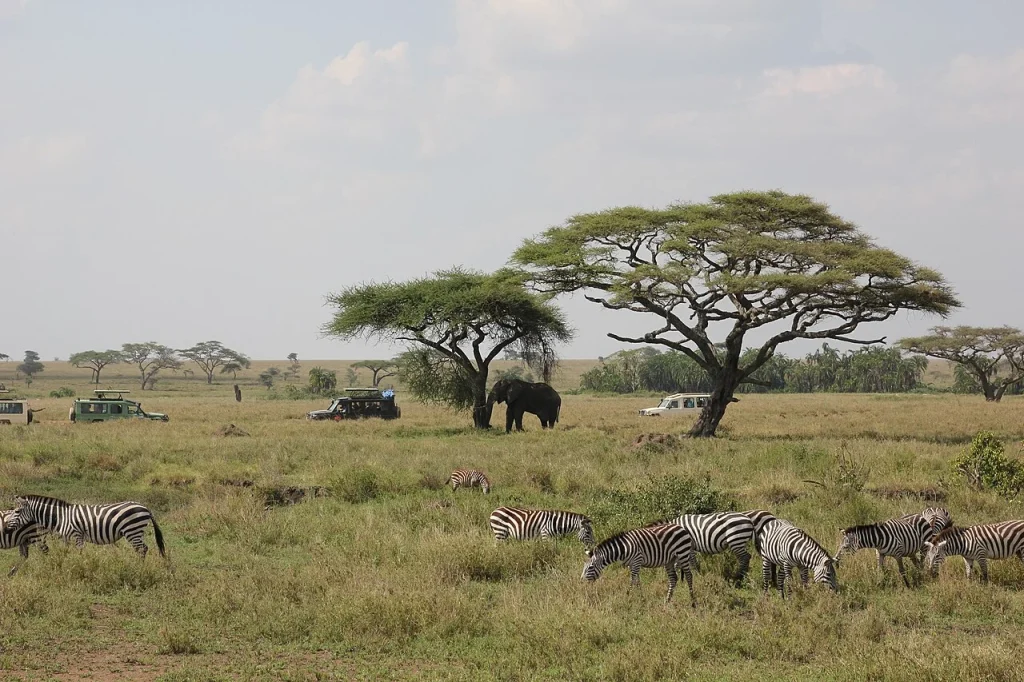

The guide and vehicle shape how a safari day is experienced. They affect conversation, visibility, the rhythm of stops and the practical movement between places. A useful comparison starts with the actual service being offered, rather than a photograph of a vehicle that may have no connection to it.
Our June 2019 image records wildlife and vehicles within the Serengeti landscape. Use it as documentary context, then ask which vehicle is part of the actual arrangement you are considering.

Balloon Safari & Bush Breakfast in Tarangire - Miracle Experience
Miracle Experience is a premier eco-luxury Hot Air Balloon Safari company based in Tanzania. Our incredible safaris over the Serengeti and Tarangire N...

4h Quad Adventures in Zanzibar: Nungwi / Kendwa Transfer inclus
The price for this activity applies to a maximum of 2 people per Quad. Whether you book for one or two people, the p...

Stone Town Private Walking Tour
It's fascinating to explore historic Stone Town - a UNESCO World Heritage Site - but it's easy to lose your way in t...

Affordable and Reliable Taxi Services in Zanzibar Island
Our services are reliable and affordable, our drivers are very friendly and they are willing to provide extra help t...
Ask about the guiding relationship
Find out who provides the guiding and how the service is arranged. Is the same guide expected throughout the stated programme? Which language will be used? Which parts of the visit involve guiding, and which are transfers or independent time? A clear answer is more useful than a broad promise of a “personal” experience.
Explain your interests without writing a list of required encounters. A guide can respond more meaningfully to an interest in birds, landscape or animal behaviour than to a demand for a particular photograph. Ask how they approach interpretation and how they distinguish an observation from an uncertain explanation.
Describe the vehicle details you need
| Subject | Discuss the actual arrangement |
|---|---|
| Party | Who shares the vehicle during each part of the programme? |
| Seating | How are seats, views and access arranged for this group? |
| Belongings | What space and handling are available for the luggage or equipment you intend to bring? |
| Communication | How will commentary and practical instructions reach everyone? |
If a physical requirement affects your choice, ask for a specific description rather than relying on a generic image. Discuss the arrangement before committing, and retain the written confirmation. The exact service may differ between a transfer, a game drive and an activity provided by accommodation.
Recognize the work beyond the visible outing
In a 2022 interview published by Frankfurt Zoological Society, cook Fatuma Saidi described preparing food for its Seronera conservation workshop staff. The account, written by Samira Haji, gives a concrete view of work supporting the people who maintain conservation vehicles. It is published source material, not an interview conducted by this site.
That story is a useful prompt to think beyond the most visible role. Ask a prospective provider how its programme is organized, which services it supplies and which are contracted separately. Do not assume that a conservation project, local business or named person is connected to an offer unless that relationship is actually established.
Agree on expectations that can be discussed
Ask how changes are communicated and what happens when an intended part of the programme cannot proceed. A thoughtful explanation should leave room for conditions and current park instructions. Privacy in the arrangement does not make the landscape controllable.

Mnemba Island snorkeling and Swimming with Dolphin
Increase your chances of spotting some of Tanzania’s rarest marine life during a snorkeling tour that takes you to some of the best wildlife-watchin...

Private/Sharing: Explore Mnemba Island with a dhow
Enjoy a full day trip to Mnemba Island with one of our traditional Dhows. Mnemba Island is a small island located ou...

Kilimanjaro one day hike experience by KILITA SAFARIS
Experience a scenic day hike on Mount Kilimanjaro via the popular Marangu Route, perfect for beginners and travelers...

3 Days Selous (Nyerere National Park) Safari from Zanzibar & Back
Travel in Tanzania with safe, reliable, and comfortable transportation designed to make your journey seamless from s...
Read provider offers with these questions beside you. Compare the details that have been stated, mark the gaps and direct operational questions to the responsible provider. This publication does not supply guides, own vehicles or make bookings on their behalf.

Balloon Safari & Bush Breakfast in Serengeti - Miracle Experience
Miracle Experience is a premier eco-luxury Hot Air Balloon Safari company based in Tanzania. Our incredible safaris over the Serengeti and Tarangire N...

Serengeti Balloon Safari and authentic bush breakfast
Some things are worth getting up early for and this is certainly one of them. The wonderful experience of a hot-air...

Materuni Waterfalls, coffee tour & Kikuletwa Hot Springs
A comprehensive trip, combining hiking, coffee learn, local brewers & a refreshing dip at the hot springs Great cha...

3 Days Serengeti & Ngorongoro Group Camping Safari
On this 3-day camping safari, you will be well looked after and see some of the best that Tanzania has to offer. You...