
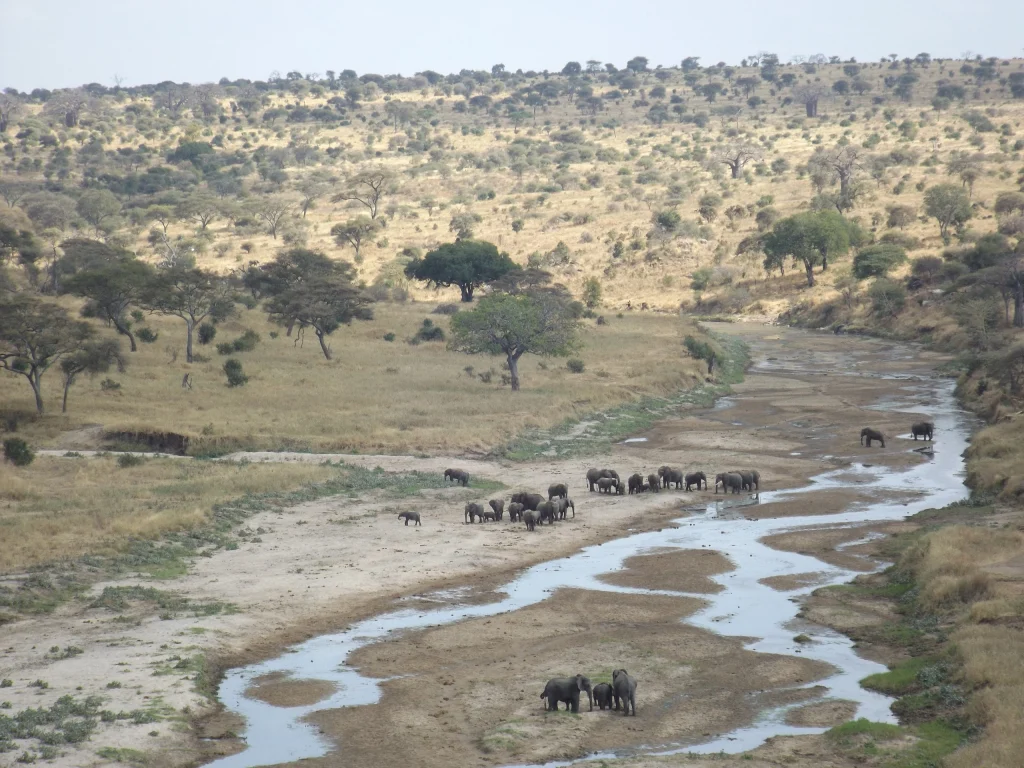

An animal can be the beginning of an observation rather than the end of a search. Once you have noticed it, the surrounding setting offers more to consider: other animals, vegetation, distance and the way the group occupies the landscape. That wider view gives a sighting context without needing a dramatic story.
The photograph above shows elephants along a watercourse in the Serengeti in February 2013. It is a record of that moment. It does not identify a place where the same gathering will occur during a future visit, and it is not a suggested schedule for finding elephants.

Balloon Safari & Bush Breakfast in Tarangire - Miracle Experience
Miracle Experience is a premier eco-luxury Hot Air Balloon Safari company based in Tanzania. Our incredible safaris over the Serengeti and Tarangire N...

Balloon Safari & Bush Breakfast in Serengeti - Miracle Experience
Miracle Experience is a premier eco-luxury Hot Air Balloon Safari company based in Tanzania. Our incredible safaris...

Serengeti Balloon Safari and authentic bush breakfast
Some things are worth getting up early for and this is certainly one of them. The wonderful experience of a hot-air...

Materuni Waterfalls, coffee tour & Kikuletwa Hot Springs
A comprehensive trip, combining hiking, coffee learn, local brewers & a refreshing dip at the hot springs Great cha...
Choose a question before a checklist
UNESCO’s Serengeti account describes varied habitats and relationships between large herbivores, predators and seasonal movement. It is a useful reminder that the park is more than a collection of isolated animal portraits. Keep that ecological setting in mind while letting a qualified guide explain what can be observed on the day.
A simple question can hold attention: how are individuals spaced, what changes when they move, or which part of the setting are they using? Describe what you see before interpreting why it happens. A trunk movement or a change of direction may be visible; an explanation of intention needs more care.
Agree on the pace of a stop
Tell a prospective guide whether you prefer a sustained look, a broad introduction or time to photograph a small detail. Other practical responsibilities still apply, and a guide may need to move on. A preference is part of a conversation, not an entitlement to remain wherever you wish.
Within a party, leave space for different interests. Someone who has put the camera down may notice a sound or a change beyond the frame. A child may ask a question an adult has stopped considering. Discuss how to share attention without turning every pause into a competition for a particular photograph.
.jpg)
Change the scale of attention
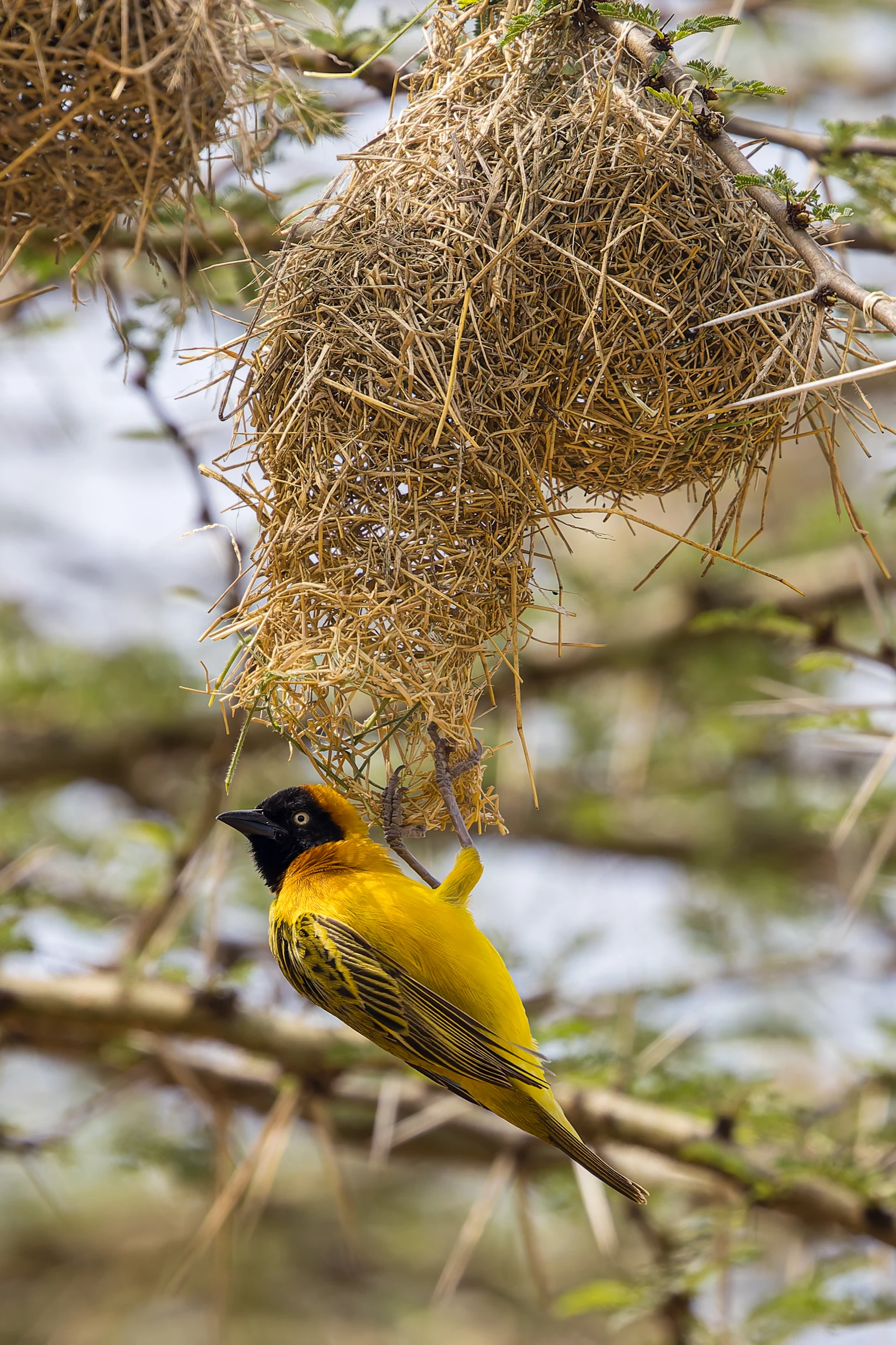
The lesser masked weaver in our January 2025 photograph offers a smaller subject than the elephant group. Its nest and surrounding vegetation remain in view. The two images are an editorial comparison of scale; they are not a claim that these subjects can be combined at one spot or on a fixed route.
Ask about a bird, a plant or an unfamiliar sound when conditions allow. You do not need to identify everything yourself. An honest answer that remains uncertain is more useful than a confident species or behaviour claim unsupported by what is visible.
Use photographs as records
- Retain the date and a responsible place description with your images.
- Keep enough habitat in some frames to remember the setting.
- Separate a personal observation from an explanation supplied by a guide or source.
- Do not turn a single encounter into a promise for someone else’s visit.
Leave wildlife space and follow the park’s current instructions and your guide’s directions. Our images are not measurements of an appropriate viewing distance. The photographs show what their creators recorded, not permission to approach an animal.

3 Days Serengeti & Ngorongoro Group Camping Safari
On this 3-day camping safari, you will be well looked after and see some of the best that Tanzania has to offer. You will experience breathtaking wild...

4h Quad Adventures in Zanzibar: Nungwi / Kendwa Transfer inclus
The price for this activity applies to a maximum of 2 people per Quad. Whether you book for one or two people, the p...

Stone Town Private Walking Tour
It's fascinating to explore historic Stone Town - a UNESCO World Heritage Site - but it's easy to lose your way in t...

Affordable and Reliable Taxi Services in Zanzibar Island
Our services are reliable and affordable, our drivers are very friendly and they are willing to provide extra help t...
When you compare private arrangements, explain the kind of attention you value. Time spent understanding one encounter can be worthwhile even when the day differs from the pictures that first inspired it.